
Buying or Selling Your Home
Let our expert conveyancers handle the legal work – swiftly, securely, and stress-free.


Conveyancing Solicitors for Property Matters
Whether you are buying or selling a property in Crowborough, Burgess Hill, Haywards Heath, or the surrounding areas, our experienced conveyancing team are here to make the process smooth and straightforward.
We’ll manage the legal side of your sale from start to finish, keeping you informed at every stage and helping you complete as quickly as possible.
What Is Conveyancing?
Conveyancing is the legal process of transferring ownership of a property. It involves preparing legal documents, managing enquiries and working with the solicitor, agents and related parties to ensure a legally binding and compliant transaction.
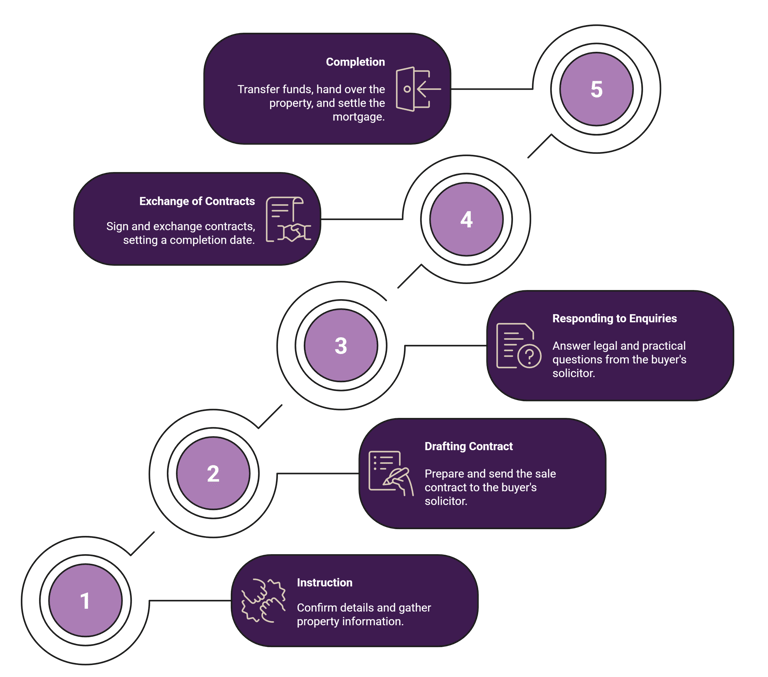
Our role is to:
Prepare or review the contract pack, as the case may be.
Handle legal enquiries.
Liaise with your estate agent and mortgage lender (if applicable) and solicitors.
Resolve any legal issues that arise
Exchange contracts and agree a completion date
Manage completion procedures.


Why choose us ?
Conveyancing transactions can be time-sensitive and stressful – especially if you're part of a chain. Our conveyancing team is proactive, responsive, and dedicated to getting your sale completed with minimal fuss.
Transparent fees – no hidden costs
Regular updates – we keep you informed throughout
Fast and efficient – we try to avoid unnecessary delays
Experienced team – dealing with freehold and leasehold properties
Whatever your conveyancing needs we ensure everything is handled professionally and without complication.


For a price guide and to understand the conveyancing process, please download our guidance notes here
On average, the conveyancing process for selling a property in the UK takes 12 to 16 weeks, though this can vary depending on factors like property type, chain complexity, and responsiveness of the opponent's solicitors.
Why choose Claire Nash Solicitors?
We have a wealth of conveyancing experience, particularly in Crowborough and Haywards Heath.
Let us manage the sale of your property.


Our experienced conveyancing solicitors and professionals
Claire Nash
Emma Santos




Carol Myrdal
Frequently asked questions
What is a transfer of equity and when is it needed?
A transfer of equity occurs when the ownership of a property changes without a full sale taking place. Common situations include adding a partner or spouse to the title, removing an ex-partner following a relationship breakdown, transferring a property to a family member as a gift, and restructuring property ownership for tax or estate planning purposes. A transfer of equity involves conveyancing work and may also trigger Stamp Duty Land Tax depending on the circumstances, particularly if a mortgage is involved. It will also require the consent of any existing mortgage lender. We handle transfers of equity regularly and advise on the process involved, and stamp duty payable but specific to your situation, but we are not currently on any lender panels and therefore are not able to assist where changes to mortgages are concerned.
How long does conveyancing take when buying a property?
The conveyancing process for a straightforward purchase typically takes between eight and twelve weeks from the point of instructing a solicitor to completion. However, this can vary significantly depending on factors outside your control, including how quickly the seller's solicitor responds, the results of property searches, the length of the chain, and whether any issues arise with the title or survey, and any mortgage or financing requirements.
Leasehold properties have become much more complex since the Grenfell Tower tragedy and the introduction of the Building Safety Act 2022, and they generally take longer than freehold properties due to the additional enquiries required. New-build purchases are also often subject to delays, particularly if the property is not yet ready for occupation. We will keep you updated at every stage and work to progress your transaction as efficiently as possible.
What is the difference between exchange of contracts and completion?
Exchange of contracts is the point at which the sale becomes legally binding for both parties. Before exchange, either the buyer or seller can withdraw from the transaction without legal penalty, though they may lose costs incurred. At exchange, the buyer pays a deposit, typically 10% of the purchase price, and both parties sign identical contracts. A completion date is agreed as part of the exchange. Completion is the day the remaining money is transferred, and ownership of the property passes to the buyer. The keys are released, and the buyer can move in. The period between exchange and completion is typically one to four weeks, though it can be on the same day in some cases.
Do I need a solicitor for conveyancing, or can I use a licensed conveyancer?
Both solicitors and licensed conveyancers are qualified to carry out conveyancing work and are regulated by different professional bodies. Solicitors are regulated by the Solicitors Regulation Authority and are qualified to advise on a broader range of legal matters if issues arise during the transaction, such as boundary disputes, rights of way or problems with the title that require legal expertise beyond pure conveyancing. Licensed conveyancers are specialist property lawyers regulated by the Council for Licensed Conveyancers. For a straightforward residential transaction, either can be a good choice. For more complex purchases, the broader legal expertise of a solicitor can be an advantage.
What searches are carried out during conveyancing and what do they reveal?
Several searches are carried out as standard during the conveyancing process to reveal information about the property and its surrounding area that is not apparent from a physical inspection. A local authority search reveals planning history, road adoption, any notices or proposals that might affect the property and whether it is in a conservation area. A water and drainage search confirms whether the property is connected to mains water and sewerage. An environmental search identifies potential contamination, flood risk and ground stability. Additional searches may be recommended depending on the location. We will advise you on which searches are appropriate for your transaction.
What happens if the seller pulls out after exchange of contracts?
Once contracts have been exchanged, both parties are legally bound to complete the transaction on the agreed date. If the seller withdraws after exchange, they are in breach of contract. The buyer is entitled to recover their deposit and can sue for additional losses, including legal fees, survey costs, mortgage arrangement fees, and any other costs directly caused by the breach. In most cases, a court can also order specific performance, requiring the seller to complete the sale. Pulling out after exchange is therefore a very serious step with significant financial and legal consequences. Before exchange, there is no legal obligation on either side to proceed.
What is a leasehold property and how does it affect conveyancing?
A leasehold property means you own the right to occupy the property for a fixed period set out in the lease, rather than owning the land and building outright. Most flats in England and Wales are leasehold. The freeholder retains ownership of the building and the land.
It is becoming more common for leaseholders to own a share of the freehold to reduce the costs of management company fees. Leasehold conveyancing involves additional considerations, including the length of the remaining lease, which can affect mortgage eligibility and resale value, annual service charges and ground rent, the terms of the lease, including any restrictions on alterations or subletting, and the financial health of the management company. We will review all of these carefully and flag anything that requires attention before you commit to the purchase.
How much does conveyancing cost and what is included?
Conveyancing costs consist of legal fees, plus VAT charged by your solicitor and disbursements, which are third-party costs that we pay on your behalf and pass on to you. Disbursements include search fees, Land Registry registration fees, and Stamp Duty Land Tax if applicable. Our legal fees are quoted clearly in advance and cover all the work involved in your transaction from instruction to completion. We do not charge hidden extras. The total cost of conveyancing will depend on the purchase price of the property, whether it is freehold or leasehold, and the complexity of the transaction. We are happy to provide a detailed quote before you instruct us.
Website Privacy Policy
Sign up for our newsletter coming soon!
Website Terms & Conditions
© 2025. All rights reserved.
Site design by Betterment Agency
Claire Nash Solicitors is the trading name of Claire Nash Solicitors LTD Co. No. 10958514, VAT Number 285 152495 Claire Nash Solicitors is authorised and regulated by the Solicitors Regulation Authority. SRA number 643261