
Probate Solicitors
We appreciate that the need for probate services comes at a time of grief, so we make the process as stress-free as possible.





What is Probate?
Probate may be required when a loved one passes away. Essentially, it means the accessing and distribution of the person’s estate according to their will (if they left one), or according to the law of intestacy (if they did not leave a will).


What is the Probate Process?
A grant of probate may need to be obtained in the estate to allow the executors access to certain assets, in order to distribute to the beneficiaries of the Will or under the rules of intestacy.
We are able to assist you in either:
Obtaining the Grant only. We will apply for the Grant, based on the information provided to us by you. Once received, you will be able to deal with the third parties with the Grant yourself.
Executor Support. We will be on hand to advise on the different aspects of administrating an estate should you wish.
Full Estate Administration. We will deal with all aspects of the administration, from dealing with third parties (such as banks and building societies), to paying inheritance tax, applying for the Grant of Probate, collecting in the estate and distributing the estate according to the Will or the law of intestacy
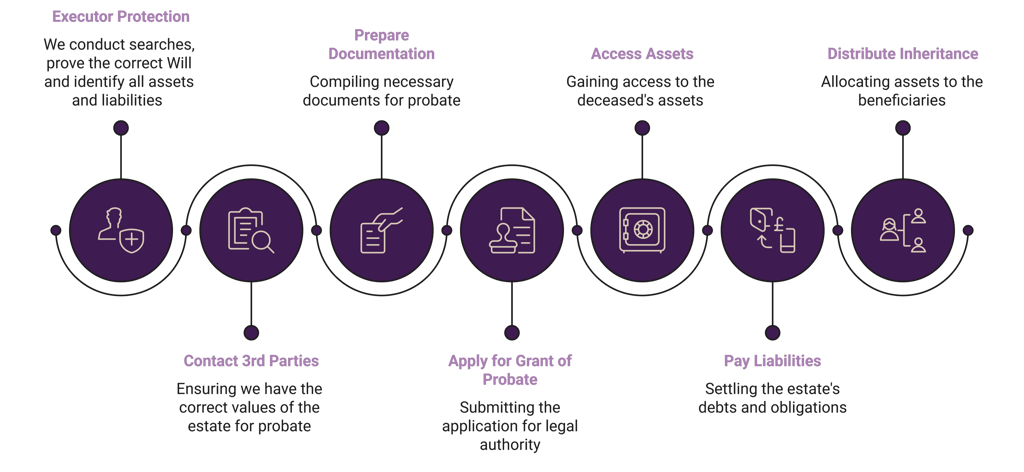

The Probate Process
Why use a solicitors' firm for Probate?
The probate team at Claire Nash Solicitors are highly qualified and experienced in all manner of probate related matters. We ensure the estate is administered to a high standard and liaise with the third-parties, such as HMRC, inheritance tax, banks, collecting in the estate and paying the beneficiaries. These are all tasks that require time and effort and can cause considerable stress at what is already an emotional time. Why not allow us to take the pressure for you so you can concentrate on what is important to you.




How Long Does Probate Take?
It can, on average, take between 9 to 18 months to administer an estate, depending on the complexity of the estate, whether there is an inheritance tax liability to account to HMRC, or the complexity of the Will itself.
Obtaining a Grant of Probate, generally can take between 6 - 12 months on average.
In instances where inheritance tax needs to be paid, this needs to be paid within 6 months from the end of the month that the deceased passed away, to avoid penalties and interest from accruing. If the estate comprises of certain assets such as property, HMRC may allow inheritance tax to be paid in 10 annual instalments (allowing the Grant to be obtained prior to the full account being paid). Generally, however, inheritance tax needs to be paid before obtaining the Grant of Probate.
Why choose Claire Nash Solicitors for Probate?
Losing a loved one is hard enough; let our friendly team guide you through the probate process.


Our experienced probate solicitors and professionals
Claire Nash


Anna Wakefield
Nicky Steven


How much do we charge?
Our fees for probate can vary depending on the complexity of the matter and the estate. Whilst it is not possible to estimate the total, as much will depend on the individual circumstances of the matter, most of our probate matters cost between £5,000 and £10,000 + VAT plus disbursements. VAT is charged at the current rate of 20%. This includes fees incurred from the initial consultation through to obtaining the grant (or letters of administration in an intestacy situation) to collecting in and distributing the estate to the intended beneficiaries.
In addition to our fees, there may be disbursements to pay. Currently, the cost of obtaining the Grant of Probate is £300. Additionally, it is considered best practice to undertake a will search, place Section 27 notices, and conduct an asset and liability search. This ensures the correct Will is being administered, protects you, the executor, from personal liability against claims from unknown creditors, and ensures there are no unknown assets. We use third parties to undertake these searches, and their fess are as follows:
Will search – £104 plus VAT
London Gazette Section 27 notice – £102.50 plus VAT
Local Section 27 notice (if there is a property or company in the estate) to be confirmed depending on location, but usually between £200 - £300 plus VAT
Financial Asset and Liability search - £245 plus VAT
Client Onboarding fee - £60 plus VAT
Bank charges per transaction - £30 plus VAT
Official copies from the Land Registry per document - £7 plus VAT
Frequently asked questions
How long does probate take in the UK?
The length of time probate takes depends on the complexity of the estate, but as a general guide, most straightforward estates are fully administered within six to twelve months of the date of death. The probate application itself, once submitted to the Probate Registry, typically takes up to twelve weeks to process, though this can vary. More complex estates involving property, business interests, inheritance tax disputes or family disagreements can take considerably longer. Delays often arise from waiting for institutions to release assets, resolving outstanding debts, or dealing with beneficiaries who are difficult to locate. We will give you a realistic assessment of timescales at the start of the administration.
Can I deal with probate myself, or do I need a solicitor?
It is possible to deal with probate yourself, and many people do so successfully where estates are straightforward. However, the process involves a significant amount of paperwork, correspondence with financial institutions and HMRC, and personal legal responsibility for getting things right. Errors can be costly, both in terms of time and potential personal liability. Many executors find that having a solicitor handle the process, or at least assist with the more complex aspects, reduces stress considerably during what is already a difficult time. The cost comes from the estate, not the executor's pocket, which is something many people do not initially realise. We are happy to take on as much or as little as is helpful, from a single piece of advice to full estate administration.
Do I always need probate when someone dies?
Not always. Whether probate is needed depends on what assets the deceased held and how they were owned. Jointly owned assets, such as a property held as joint tenants or a joint bank account, pass automatically to the surviving owner and do not require probate. Some financial institutions will release smaller amounts without a grant, though their thresholds vary. If the estate consists mainly of personal belongings and modest savings, probate may not be required. However, most estates that include property in the deceased's sole name, investments, or significant bank balances will require a Grant of Probate to allow the executor to deal with those assets. We can quickly advise you on whether probate is needed in your particular situation.
What is the difference between a Grant of Probate and Letters of Administration?
Both documents give Personal Representatives the legal authority to administer a deceased person's estate, but they apply in different circumstances. A Grant of Probate is issued to the executor named in a valid Will. A Grant of Letters of Administration is issued where there is no Will, or where there is a Will, but no executor is available or willing to act. In both cases, the document is issued by the Probate Registry and allows banks, investment platforms and other institutions to release assets to the person named on the Grant. The process for obtaining both documents is broadly similar, though administering an estate without a Will can be more complicated because the rules of intestacy determine who inherits rather than the wishes of the deceased.
What do Personal Representatives actually have to do during probate?
Being a Personal Representative involves a significant amount of responsibility, and work over an extended period. The main responsibilities include locating the original Will, if there is one, securing and valuing all the assets of the estate, applying for the Grant, completing inheritance tax forms and paying any tax due, collecting all assets, paying all debts and liabilities, placing a notice in the London Gazette to protect against unknown creditors, preparing estate accounts, and finally distributing the estate to the beneficiaries. A Personal Representative who distributes the estate before all debts are settled can be held personally liable for any shortfall. We work with Personal Representatives at every stage of this process and can take on as much or as little of the administration as is helpful.
Can siblings disagree during probate, and what happens if they do?
Yes, disputes among beneficiaries during probate are more common than many people expect. Disagreements can arise about the value of specific assets, whether certain items should be sold or transferred in kind, how long the administration is taking, or whether the Will accurately reflects the deceased's intentions. As executor, you have a legal duty to act in the best interests of all the beneficiaries and in accordance with the Will, which can put you in a difficult position if family opinions differ. Maintaining clear, regular communication with all beneficiaries from the outset is one of the most effective ways to prevent minor disagreements from escalating. If a dispute does arise, we can advise on your options.
What debts are paid from an estate before beneficiaries receive anything?
Before any beneficiary receives their inheritance, all of the deceased's debts must be settled from the estate in a specific order of priority set by law. Secured debts, such as a mortgage, take priority. Then come funeral expenses and the costs of administering the estate. After those come unsecured debts such as credit cards, personal loans, utility bills and HMRC liabilities, including income tax and inheritance tax. Only once all of these are settled can the remaining estate be distributed to beneficiaries. If the estate is insolvent and cannot cover all its debts, the Personal Representatives must follow the legal order of priority carefully, as distributing funds to beneficiaries before creditors are paid can result in personal liability.
How much does probate cost and who pays for it?
There are two categories of cost associated with probate: official fees and professional fees. The official fee for applying for a Grant of Probate is currently £526 for estates worth more than £5,000, with no fee for smaller estates. Additional sealed copies of the grant cost £16 each, and you will typically need several. Professional legal fees, where a solicitor assists with or manages the administration, are paid from the estate rather than by the Personal Representative personally. This means the cost does not come out of the Personal Representatives own pocket. Our fees are transparent.
Website Privacy Policy
Sign up for our newsletter coming soon!
Website Terms & Conditions
© 2025. All rights reserved.
Site design by Betterment Agency
Claire Nash Solicitors is the trading name of Claire Nash Solicitors LTD Co. No. 10958514, VAT Number 285 152495 Claire Nash Solicitors is authorised and regulated by the Solicitors Regulation Authority. SRA number 643261